

Best Places to Eat Traditional Greek Food in Athens: A Local's Guide to Authentic Flavors

Updated: Sep 16

Discover where authentic Greek cuisine still thrives, how to recognize truly local dining experiences, what dishes are worth trying beyond the classics, and why some of Athens' most memorable meals happen far from the city's busiest tourist streets.
Athens Isn't Just a City to Visit—It's a City to Taste
For many travelers, Greece begins with ancient temples, blue seas, and postcard-perfect islands. Yet long before visitors remember the marble columns of the Acropolis or the sunset over the Aegean, they often remember something else: the food.
Athens is one of Europe's oldest capitals, but its culinary identity is constantly evolving. Traditional family recipes are passed down through generations, neighborhood tavernas continue serving dishes that rarely appear on tourist menus, and local markets still dictate what arrives on the table each season.
The challenge isn't finding Greek food—it's finding authentic Greek food. Walk through the streets surrounding the Acropolis, and you'll see hundreds of restaurants promising "traditional Greek cuisine." Some truly celebrate Greece's culinary heritage. Others exist almost entirely to serve hurried tourists with identical menus translated into ten languages.
Knowing the difference can transform your trip. This guide isn't simply a list of restaurants. Instead, it's designed to help you understand how Athenians eat, where locals gather, which dishes deserve your attention, and what authentic Greek hospitality really feels like.
Along the way, we'll also share personal observations from years of welcoming thousands of travelers into our home through Eat with Giannis & Konstantinos, where conversations around the dinner table have revealed what visitors love, misunderstand, and often wish they had discovered sooner.
Whether you're visiting Athens for two days or two weeks, this guide will help you eat like a local—not just dine like a tourist. If you're planning your entire trip, our guide to Solo Travel in Athens: Experience the City Like a Local explores how to discover the city through authentic neighborhoods, local culture, and meaningful experiences.
🇬🇷 A Note from Giannis & Konstantinos
Every week, we welcome guests from all over the world into our home overlooking Athens. Some arrive excited to try moussaka. Others ask where to find "the best gyros." Many have already eaten at several restaurants before joining us. And almost every evening, we hear the same sentence:
"This is completely different from the Greek food we've had so far."
Not because restaurant food isn't good. But because Greek cuisine is much more than famous dishes. It's about sharing plates instead of ordering individually. It's about olive oil that tastes different from anything found abroad. It's about recipes that never appear on tourist menus because they're simply everyday family food.
Over thousands of dinners, we've learned that travelers aren't just looking for somewhere to eat—they're looking for a way to understand Greece through its food. That's exactly why we created this guide. We hope it helps you discover not only wonderful meals but also the people, traditions, neighborhoods, and stories that make Greek cuisine one of the richest food cultures in the Mediterranean. Welcome to our table.
— Giannis & Konstantinos
Quick Answer
If you're looking for the best traditional Greek food in Athens, focus less on famous restaurant names and more on understanding how authentic Greek dining works. Here are the essentials:
Explore neighborhoods like Koukaki, Pangrati, Petralona, Psyrri, Mets, and Exarchia, where locals regularly eat.
Avoid restaurants whose menus feature dozens of international dishes alongside Greek classics.
Look for seasonal specials instead of only permanent menu items.
Don't limit yourself to moussaka or souvlaki—try dishes like gemista, gigantes, briam, horta, imam, soutzoukakia, and stifado.
Lunch is often the best time to discover homemade "mageirefta" (slow-cooked daily dishes).
Observe the clientele. A restaurant filled with Greek families is usually a good sign.
Don't expect every authentic place to offer spectacular Acropolis views. Sometimes the best meals are found on quiet neighborhood streets.
Consider experiencing Greek cuisine inside a local home, where recipes, traditions, and hospitality come together in ways restaurants often can't replicate.
The best meal in Athens is rarely the most expensive—it is usually the most genuine.
Why Finding Authentic Greek Food in Athens Is Harder Than You Think
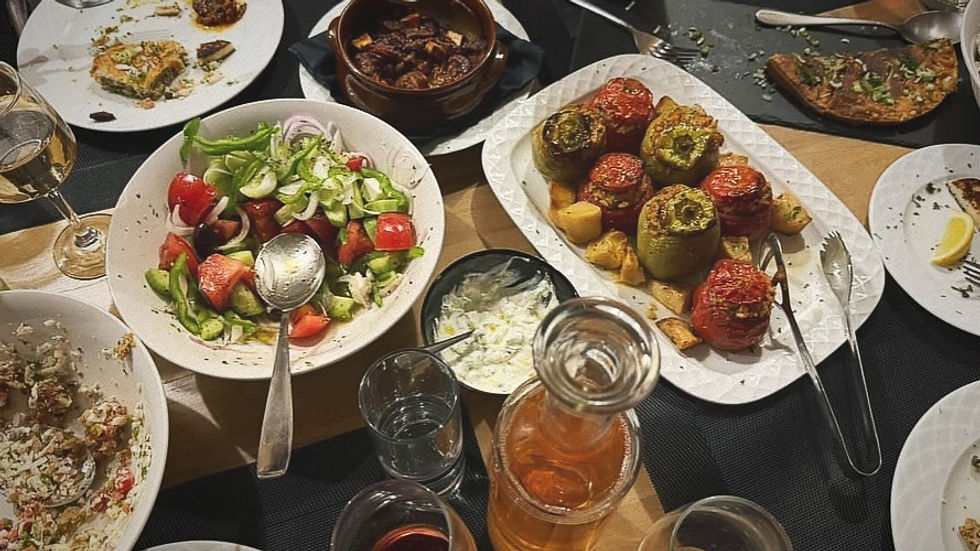
At first glance, finding traditional Greek food in Athens seems effortless. Restaurants line nearly every street, especially around the city's most famous landmarks. Menus proudly display familiar dishes like moussaka, souvlaki, tzatziki, and Greek salad, often accompanied by photographs and multilingual descriptions.
Yet beneath this abundance lies a surprising reality: not every restaurant serving Greek food offers an authentic Greek dining experience. This isn't unique to Athens. In cities around the world, areas with heavy tourism naturally adapt to international expectations. Restaurants simplify menus, standardize recipes, and prioritize speed over seasonality to accommodate visitors from every corner of the globe.
As a result, many travelers leave Greece believing they have experienced traditional cuisine when, in reality, they have only sampled a small, commercialized version of it. Authentic Greek cooking is deeply connected to everyday life rather than special occasions. It reflects the rhythm of the seasons, regional traditions, and recipes that evolved in family kitchens over generations. Many of Greece's most beloved dishes aren't flashy or widely advertised. They are comforting meals prepared slowly, often using vegetables, legumes, olive oil, herbs, and locally sourced ingredients.
Another misconception is that the "best" restaurants are always located near famous attractions. While some excellent tavernas can indeed be found around the Acropolis and Plaka, Athenians often venture beyond the busiest streets when meeting friends or celebrating with family. Neighborhoods a short walk or metro ride away frequently offer a more relaxed atmosphere, more seasonal menus, and a dining culture that feels distinctly local.
Understanding this difference changes the way you experience Athens. Instead of chasing rankings or social media trends, you begin noticing the subtle details that locals value: handwritten daily specials, conversations between regular customers and the owner, fresh bread arriving warm from the bakery next door, and tables filled with shared plates rather than individual meals. These small observations often reveal far more about Greek culture than any guidebook ever could.
From Our Table
One question appears almost every week during dinner: "Where did you learn to cook like this?" Giannis usually smiles before answering. "At home." Not at culinary school—although professional training refined his techniques—but long before that, by watching family members prepare meals without measuring cups, timers, or written recipes.
Many Greek recipes are taught through repetition rather than instruction. A grandmother might explain that the sauce cooks "until it smells right," or that the olive oil should be added "until it looks enough." These aren't vague directions; they're signs of a culinary tradition built on experience instead of formulas. It's often this invisible knowledge that travelers recognize during our dinners. They realize authentic Greek food isn't defined by complexity or presentation. It's defined by care, patience, seasonality, and the simple joy of gathering people around the same table. And perhaps that's the most authentic ingredient of all.
What Makes Greek Food Truly Authentic?
When travelers imagine traditional Greek food, they often picture a handful of famous dishes—moussaka, souvlaki, Greek salad, and baklava. While these are certainly part of Greece's culinary identity, they represent only a small fraction of what authentic Greek cuisine has to offer.
Ask ten Greek families to prepare moussaka, and you'll likely taste ten different versions. The same is true for stuffed vegetables, lentil soup, meatballs, or spinach pie. Recipes evolve from region to region, village to village, and even from one household to the next. That diversity is exactly what makes Greek food authentic. Rather than following rigid recipes, Greek cooking follows principles: fresh seasonal ingredients, simplicity, patience, and generosity. The goal is not to impress with elaborate techniques but to let each ingredient shine.
Authenticity in Greece is rarely about luxury. It's about familiarity. A humble plate of slow-cooked green beans prepared with excellent olive oil may reveal more about Greek cuisine than an expensive tasting menu designed for tourists.
Authentic Greek Cuisine Begins with the Seasons
Before supermarkets stocked strawberries in December or tomatoes year-round, Greek households cooked according to nature's calendar. That tradition remains surprisingly strong today. In spring, artichokes, peas, wild greens, and fresh herbs dominate family tables. Summer brings tomatoes bursting with flavor, zucchini, eggplants, peppers, figs, and watermelons. Autumn introduces mushrooms, chestnuts, grapes, pumpkins, and hearty stews. Winter is the season of legumes, slow-cooked meats, soups, and comforting oven dishes.
If a restaurant serves exactly the same menu every day of the year, it's worth asking whether seasonality still plays a meaningful role in its kitchen. Many authentic tavernas proudly feature handwritten daily specials because they cook according to what's freshest at the local market. Those changing dishes often become the highlight of the meal.
Olive Oil Is More Than an Ingredient

In many countries, olive oil is simply used for cooking. In Greece, it defines the cuisine. Most Greek families have olive oil produced by relatives, friends, or small village cooperatives. Conversations about olive harvests can become as passionate as discussions about wine in France or Italy. Good olive oil transforms even the simplest ingredients. Fresh tomatoes need little more than olive oil, oregano, and sea salt. Boiled greens become unforgettable with just lemon juice and a generous drizzle of extra virgin olive oil. Even lentil soup develops remarkable depth thanks to high-quality oil added just before serving. Learning to appreciate olive oil is often one of the biggest culinary discoveries visitors make during their stay in Greece.
Greek Food Is Designed for Sharing
One of the biggest cultural differences visitors notice is how meals are served. In many countries, each person orders their own appetizer and main course. In Greece, the table usually fills gradually with dishes placed in the center for everyone to share. This style of dining encourages conversation. People taste everything. Recommendations flow naturally. Someone insists you try one more bite. Another pours wine into your glass before theirs. Food becomes less about individual orders and more about creating a shared experience. It is hospitality expressed through the table.
Simplicity Is a Sign of Confidence
Authentic Greek cooking rarely hides ingredients beneath heavy sauces or complicated techniques.
Instead, it celebrates freshness. A perfectly ripe tomato doesn't need much improvement. Fresh oregano speaks for itself. Excellent feta requires nothing more than olive oil. Many traditional recipes contain surprisingly few ingredients because each one contributes genuine flavor. This simplicity demands quality. Without exceptional produce, traditional Greek cooking loses much of its magic.
Family Recipes Matter More Than Celebrity Chefs
Some of Greece's finest recipes have never appeared in cookbooks.
They're written instead in memory. Grandmothers teach grandchildren. Parents teach children. Neighbors exchange techniques. Measurements are estimated by instinct. Cooking becomes part of everyday life rather than a performance. This continuity explains why authentic Greek cuisine often feels deeply personal. Behind every traditional dish is usually someone's family story.
While traditional recipes remain at the heart of Greek cooking, many chefs are also reimagining classic flavors through modern Greek cuisine, always respecting their origins.
Hospitality Is Part of the Recipe
Greek hospitality—philoxenia—literally means "love of strangers." It extends far beyond polite service. Guests are welcomed warmly. Extra dishes may appear unexpectedly. Dessert is sometimes offered without charge. Owners ask where you're from, how long you're staying, and what you've enjoyed in Greece. Meals become conversations rather than transactions. That human connection remains one of the defining characteristics of authentic Greek dining.
From Our Table
One evening, a couple from Canada joined our dinner after spending several days exploring Athens. When Giannis served gemista—tomatoes and peppers gently baked and stuffed with fragrant rice and herbs—they smiled politely but admitted they almost hadn't booked our experience because they thought stuffed vegetables sounded "too simple." By the end of the meal, they asked for the recipe. Not because it was complicated. But because it reminded them of something they hadn't expected to find while traveling: comfort. That moment happens often. Travelers arrive searching for famous dishes and leave talking about recipes they had never heard of before. Sometimes authenticity isn't discovering something spectacular. It's discovering something honest.
How to Spot a Truly Authentic Greek Restaurant
Finding authentic Greek food isn't about choosing the highest-rated restaurant or the one with the longest line. It's about recognizing subtle clues. Locals often notice these signs instinctively. Visitors can learn to notice them too.
10 Signs You're Eating Like a Local
1. The menu isn't endless.
If a restaurant offers Greek food, Italian pizza, sushi, burgers, Mexican dishes, seafood, steaks, vegan bowls, and breakfast all day, authenticity is unlikely to be its strongest feature. Traditional tavernas usually focus on what they prepare well.
2. Daily specials are handwritten.
Many neighborhood kitchens cook according to what arrives fresh each morning. The most interesting dishes may never appear on the printed menu. Always ask: "What do you recommend today?"
3. Greek families are eating there.
Perhaps the most reliable indicator. If local families choose to spend Sunday lunch there, you're probably in the right place.
4. Meals arrive gradually.
Greek dining isn't rushed. Small dishes appear one after another. Conversation fills the pauses. The experience matters as much as the food.
5. Seasonal vegetables appear everywhere.
Fresh greens. Beans. Eggplants. Okra. Artichokes. These dishes rarely dominate tourist menus but are staples of Greek home cooking.
6. Bread arrives automatically.
Fresh bread is considered part of the meal. Don't be surprised if it appears without being ordered.
7. Desserts may be complimentary.
Many traditional tavernas finish meals with fruit, yogurt, spoon sweets, or homemade desserts offered by the house. It's a gesture of hospitality rather than a marketing strategy.
8. Staff happily explain the dishes.
Authentic restaurants are usually proud of their recipes. Questions are welcomed. Curiosity is appreciated.
9. The atmosphere feels relaxed.
Nobody rushes you to leave. Tables remain occupied long after meals end. Coffee arrives. Conversation continues. Time slows down.
10. Simplicity outweighs spectacle.
No dry ice. No oversized cocktails. No theatrical presentations. Just excellent food prepared with care.
10 Red Flags That Suggest a Tourist Trap
Not every restaurant near famous attractions is a tourist trap—but certain warning signs appear surprisingly often.
Watch for these clues:
Menus with photographs of every dish.
Hosts aggressively inviting passersby inside.
Frozen seafood displayed as "fresh."
Restaurants offering dozens of unrelated international cuisines.
Identical menus in many different languages with no seasonal specials.
Staff encouraging you to order immediately before you've had time to read the menu.
Generic "Greek platter" combinations designed mainly for tourists.
Suspiciously low prices around major landmarks.
Empty dining rooms during normal Greek meal times.
Reviews that repeatedly mention convenience but rarely describe the actual food.
None of these signs alone guarantees a poor experience, but together they often indicate a restaurant designed primarily around tourist traffic rather than local culinary traditions.
Local Tip
Instead of asking a hotel receptionist,
"Where is the best restaurant?"
try asking,
"Where would you take your parents for Sunday lunch?"
The answers are often completely different—and far more memorable.
The Best Neighborhoods for Traditional Greek Food in Athens
One of the biggest mistakes travelers make is assuming that the best Greek food is concentrated around the Acropolis. It's understandable. Most visitors stay within walking distance of the city's major landmarks, making neighborhoods like Plaka and Monastiraki their default dining destinations. But Athens is a city of neighborhoods. Each district has developed its own rhythm, atmosphere, and culinary identity. Some are lively and historic. Others are residential and quietly authentic. Some attract visitors from around the world, while others remain places where Athenians meet after work, celebrate birthdays, or enjoy long Sunday lunches with family.
Understanding these neighborhoods won't just help you find better food—it will help you experience Athens more like the people who live here.
Plaka – History on Every Corner
Walking through Plaka often feels like stepping into another era. Neoclassical houses, narrow marble streets, flowering balconies, and small squares create one of the city's most romantic settings. Unsurprisingly, it's also one of Athens' busiest dining districts. Because of its popularity, Plaka offers both genuine culinary experiences and restaurants designed primarily for visitors. Learning to distinguish between the two is essential.
What to eat here
Plaka is an excellent place to try:
Moussaka
Pastitsio
Dolmadakia
Greek salad
Grilled lamb
Homemade pies
Local wines
These classic dishes appear throughout the neighborhood, but quality varies considerably.
Local Tip
Avoid restaurants located directly on the busiest pedestrian streets if every table is occupied exclusively by tourists. Instead, wander a few side streets away from the largest crowds. Often, just a five-minute walk makes a remarkable difference.
Best time to visit
Lunch offers a quieter atmosphere and better opportunities to appreciate the neighborhood before evening crowds arrive. Many travelers continue exploring the city after visiting the Acropolis, and choosing the right neighborhood for dinner can completely change the experience.
Hidden Gem Insight
The greatest luxury in Plaka isn't finding the restaurant with the best Acropolis view. It's discovering a peaceful courtyard hidden behind ivy-covered walls where conversations replace loud music and meals unfold slowly.
Psyrri – Athens' Creative Food District

Psyrri has transformed dramatically over the past two decades. Once known primarily for workshops and craftsmen, it has become one of Athens' liveliest neighborhoods, balancing creativity, nightlife, traditional tavernas, artisan shops, and contemporary Greek gastronomy. Unlike Plaka, Psyrri feels less polished and more spontaneous. Street art sits beside century-old buildings. Traditional coffee shops share streets with innovative bakeries. Musicians often perform in small squares after sunset. The atmosphere reflects modern Athens without abandoning its roots.
What to try
Psyrri is particularly good for:
Meze
Grilled meats
Traditional sausages
Local cheeses
House wine
Homemade desserts
Many restaurants encourage ordering several small dishes for sharing rather than individual main courses. This style captures the social spirit of Greek dining perfectly.
Local Tip
Come hungry. Greek meze has a way of multiplying. What begins as "just a few small plates" often becomes an unforgettable feast.
Koukaki – Where Travelers Meet Local Life
Just south of the Acropolis lies Koukaki, a neighborhood that has quietly become one of Athens' favorite places for both residents and informed travelers. Its charm lies in balance. It feels residential without being sleepy. Central without feeling overwhelmed. Modern without losing authenticity. Many Athenians choose Koukaki because it offers excellent food while remaining within walking distance of the city's historic center. Koukaki is also one of the neighborhoods we often recommend alongside several other hidden gems in Athens that visitors rarely discover during a short stay.
What to eat
This is a wonderful neighborhood for discovering everyday Greek cooking:
Gemista
Briam
Lentil soup
Fasolakia
Stuffed vine leaves
Homemade desserts
Restaurants here often focus on comfort food rather than elaborate presentations. Meals feel familiar. Relaxed. Almost homemade.
Hidden Gem
Spend time walking the quieter residential streets instead of remaining on the main avenues. Some of the neighborhood's most memorable meals are hidden where tourists rarely wander.
Pangrati – Athens' Culinary Rising Star

Ask young Athenians where they enjoy meeting friends for dinner, and Pangrati appears frequently in the conversation.
Located east of the Panathenaic Stadium, this neighborhood combines elegant residential streets with a thriving food scene that has grown organically rather than through tourism. It attracts chefs interested in local ingredients, neighborhood cafés filled with regular customers, and tavernas that balance tradition with creativity.
Perfect for
Seasonal Greek cuisine
Modern interpretations of traditional recipes
Local wine bars
Slow dinners
Pangrati rewards curiosity. Rather than searching for famous restaurants, simply walking through the neighborhood often leads to pleasant surprises.
Local Tip
If a menu changes frequently, that's usually a very good sign. Seasonality matters here.
Petralona – One of Athens' Best-Kept Culinary Secrets

If locals were choosing only one neighborhood for a relaxed evening meal with friends, Petralona would appear on many lists. Located west of Thissio, it remains refreshingly residential. There are fewer souvenir shops. Fewer organized tour groups. More conversations. More families. More regular customers. Dining here feels slower. More personal. Restaurants don't compete through spectacle. They compete through consistency.
What to order
Petralona is particularly known for:
Slow-cooked meats
Oven dishes
Seasonal vegetables
Grilled fish
Traditional desserts
It's an ideal neighborhood for travelers hoping to experience everyday Athens.
From Our Table
Guests often ask us where we go when we're not working. They usually expect the answer to be somewhere famous. Instead, we often mention neighborhoods rather than restaurants. Because that's how Athenians think. We don't always choose a destination because of one particular taverna. We choose an area where we know we'll enjoy walking, talking, and eventually discovering somewhere that simply feels right. Sometimes the best meals aren't planned at all.
Monastiraki – More Than Just Souvlaki
Monastiraki is one of Athens' busiest crossroads. Visitors come for the flea market, rooftop views, and vibrant atmosphere. Naturally, countless restaurants cater to this constant flow of people. While many visitors stop here only for quick souvlaki, the neighborhood offers much more if you're willing to explore beyond the main square.
Worth trying
Fresh grilled seafood
Meze
Traditional desserts
Greek coffee
Local spirits like tsipouro and ouzo
Walk a few streets away from the busiest tourist routes and you'll discover a very different side of Monastiraki.
Mets – Quiet Elegance
Small. Leafy. Residential. Mets feels almost hidden despite its proximity to central Athens. Its tavernas tend to attract neighborhood residents rather than large tourist groups. Meals here are unhurried. The atmosphere is calm. Perfect for travelers who prefer authentic experiences over crowded attractions.
Thissio – Dining with a View
Few places combine scenery and atmosphere quite like Thissio. Walking beneath the illuminated Acropolis before dinner is an experience every visitor should enjoy at least once. While restaurants with spectacular views naturally attract tourists, quality varies. Rather than choosing solely based on the panorama, pay attention to the menu, clientele, and pace of service. The best view is even better when accompanied by excellent food.
Exarchia – A Different Side of Athens
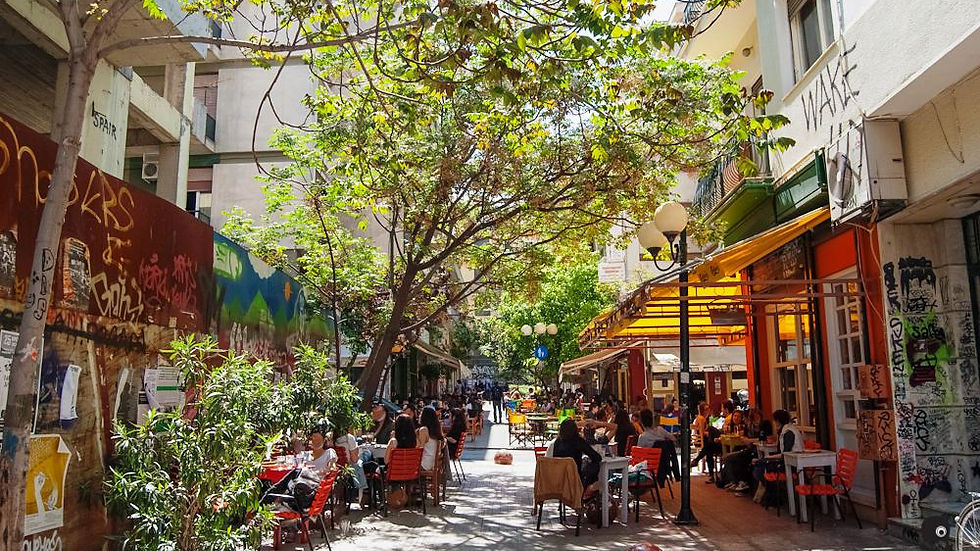
Exarchia isn't for travelers seeking polished postcard scenery. It represents one of Athens' most intellectually vibrant neighborhoods. Artists. Students. Bookshops. Independent cafés. Traditional tavernas. Political history. Creative energy. Food here often reflects authenticity over presentation. Menus are seasonal. Atmospheres are relaxed. Prices remain refreshingly reasonable. For curious travelers willing to step beyond conventional itineraries, Exarchia offers one of Athens' most genuine dining cultures.
Kypseli – Athens' Multicultural Future
Kypseli tells the story of contemporary Athens. Greek traditions meet influences from across the Mediterranean, the Balkans, the Middle East, and Africa. While traditional Greek tavernas continue serving classic recipes, the neighborhood also demonstrates how Greek cuisine evolves without losing its identity. Exploring Kypseli offers a fascinating glimpse into the city's future while respecting its culinary past.
Comparing Athens' Food Neighborhoods
NeighborhoodBest ForAtmosphereIdeal Visitor | |||
Plaka | Classic first-time experience | Historic | First-time visitors |
Psyrri | Meze & nightlife | Vibrant | Couples & groups |
Koukaki | Local everyday food | Relaxed | Solo travelers |
Pangrati | Modern local cuisine | Trendy | Food lovers |
Petralona | Authentic tavernas | Residential | Returning visitors |
Monastiraki | Street food & markets | Lively | Short stays |
Mets | Quiet dinners | Elegant | Couples |
Thissio | Dinner with Acropolis views | Scenic | Evening walks |
Exarchia | Alternative Athens | Bohemian | Curious travelers |
Kypseli | Contemporary food culture | Multicultural | Explorers |
Local Insight
If you only have one evening in Athens, it's perfectly reasonable to enjoy dinner in Plaka or Thissio after visiting the Acropolis. But if you have several days, venture beyond the postcard neighborhoods. Athens reveals its true culinary personality one neighborhood at a time.
Traditional Greek Dishes Every Traveler Should Try (Beyond Moussaka and Souvlaki)
Ask someone who has never visited Greece to name a Greek dish, and chances are they'll mention moussaka, souvlaki, or perhaps a classic Greek salad. They're not wrong. These dishes have become international ambassadors of Greek cuisine, appearing on restaurant menus from New York to Melbourne. But ask a Greek family what they cooked last Tuesday, and the answer will probably be something entirely different.
Perhaps a tray of gemista filled the kitchen with the aroma of fresh herbs. Maybe a pot of fasolakia simmered slowly in tomato sauce and olive oil. Or perhaps lunch was as simple as lentil soup, crusty bread, feta cheese, and olives shared around the table. This is where many travelers discover an important truth: The heart of Greek cuisine isn't found in its most famous dishes—it's found in the meals Greeks actually cook at home. Many of these family recipes are also part of our traditional Greek tasting menu, where guests discover dishes that rarely appear in tourist restaurants.
If you want to understand Greece through its food, don't stop at the classics. Explore the dishes locals grow up eating. You may discover your favorite meal is one you've never heard of.
You can explore our complete Greek dinner experiences in Athens to find the one that suits your visit.
Myth vs Reality
Myth
Greeks eat souvlaki every day.
Reality
Souvlaki is popular, especially as quick street food, but it isn't the foundation of everyday Greek cooking. Most home-cooked meals revolve around vegetables, legumes, olive oil, seasonal ingredients, seafood, and slow-cooked recipes.
1. Gemista (Stuffed Tomatoes and Peppers)
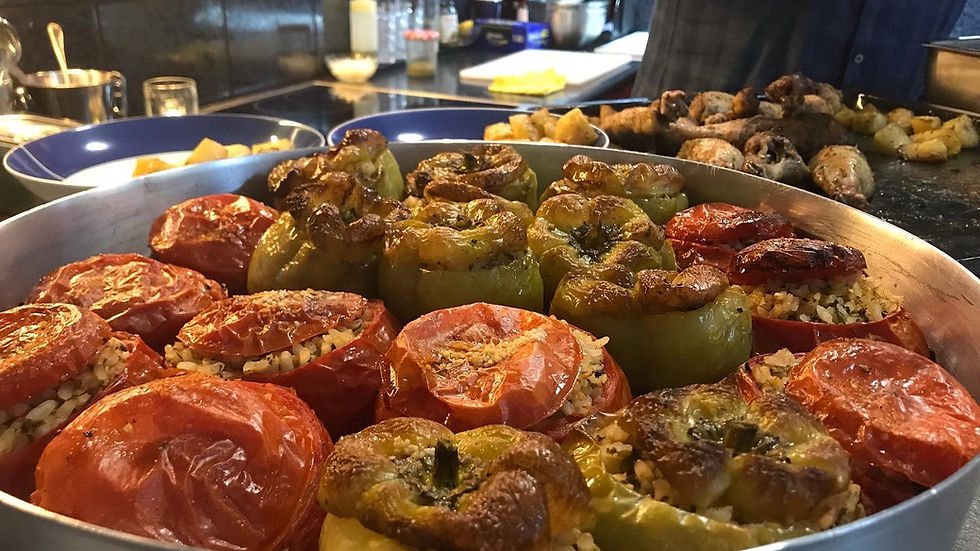
If there is one dish that perfectly represents Greek home cooking, many Greeks would choose gemista. Large tomatoes and peppers are carefully hollowed out, filled with fragrant rice, herbs, onions, and olive oil, then baked slowly until every ingredient melts together. Some families also include minced meat. Others insist the vegetarian version is the only authentic one. Both opinions are passionately defended across Greece.
Best season
Summer. When tomatoes are naturally sweet, gemista becomes unforgettable.
Why travelers love it
It's light. Healthy. Deeply flavorful. And surprisingly different from anything most visitors expect.
If you'd like to taste recipes like these prepared in a family home, our Greek Feast experience celebrates many of the dishes Greeks grow up eating.
Ask Giannis
If you could recommend only one Greek dish to someone visiting for the first time, what would it be?
"Gemista. They look simple. But they capture everything Greek cooking is about—seasonal vegetables, herbs, patience, excellent olive oil, and recipes that families have cooked for generations."
2. Briam
Often described as Greece's answer to ratatouille, briam combines zucchini, potatoes, tomatoes, onions, peppers, and generous olive oil. Everything roasts slowly until the vegetables become incredibly tender. Served with feta cheese and fresh bread, it's one of summer's greatest pleasures.
Travelers are often surprised by how many naturally vegan Greek dishes exist within traditional Greek cuisine.
3. Fasolakia
Green beans cooked slowly with tomatoes, onions, garlic, parsley, and olive oil. Simple? Yes. Ordinary? Not at all. When prepared well, fasolakia demonstrates how Greek cuisine transforms humble ingredients into memorable meals.
4. Gigantes Plaki
Large white beans baked in tomato sauce with herbs and olive oil. Creamy. Comforting. Rich without feeling heavy. A favorite meze as well as a satisfying main course.
5. Imam Bayildi
Eggplant slowly cooked with onions, garlic, tomatoes, parsley, and olive oil until it becomes almost silky. Legend says an imam fainted after tasting it. Whether from delight or the amount of olive oil remains a matter of debate. Either way, it's one of Greece's finest vegetable dishes.
What Surprises Our Guests Most
Many guests arrive expecting meat to dominate Greek cuisine. Instead, they're amazed by how often vegetables become the favorite course of the evening. Some even tell us they plan to recreate these recipes once they return home. It's one of our favorite compliments.
6. Horta
Wild seasonal greens simply boiled and served with lemon juice and extra virgin olive oil. That's all. And that's enough. This dish reflects one of the defining characteristics of Greek cuisine: when ingredients are exceptional, very little else is needed.
7. Dolmadakia
Tender vine leaves wrapped around aromatic rice, herbs, and sometimes minced meat. Served warm or cold. Often accompanied by yogurt or lemon sauce. Perfect as part of a shared meal.
8. Soutzoukakia Smyrneika
Juicy meatballs flavored with cumin and cooked in rich tomato sauce. Originally brought to Greece by refugees from Smyrna (modern Izmir), this dish carries history on every plate. Its comforting aroma instantly evokes Sunday family lunches.
9. Stifado
One of Greece's great winter classics. Beef or rabbit slowly braised with pearl onions, tomatoes, cinnamon, cloves, bay leaves, and red wine. Patience is the secret ingredient.
10. Arni Lemonato
Slow-cooked lamb infused with lemon, garlic, oregano, and olive oil. Simple Mediterranean flavors create extraordinary depth. Often served at family celebrations.
Myth vs Reality
Myth
Greek food is always heavy.
Reality
Traditional Greek cuisine is largely Mediterranean. Many everyday meals are naturally vegetarian, based on legumes, vegetables, herbs, grains, seafood, and olive oil. It's far lighter than many visitors expect.
11. Revithada
Slow-cooked chickpeas. Creamy. Earthy. Comforting. Particularly associated with the Cycladic islands.
12. Fava
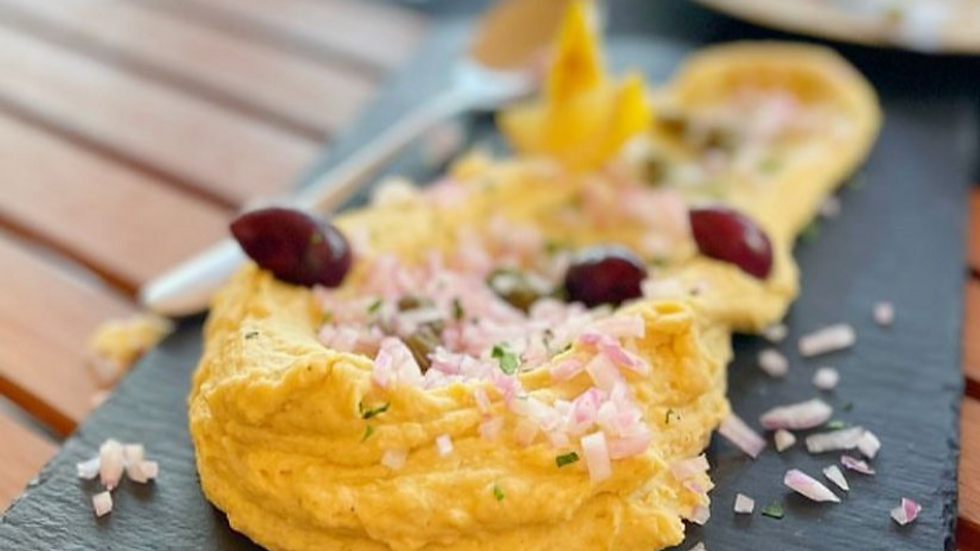
Despite its name, Greek fava isn't made from fava beans. Instead, it's prepared using yellow split peas. Smooth. Velvety. Finished with olive oil, onions, capers, or herbs.
13. Kolokithokeftedes
Crispy zucchini fritters packed with mint, dill, feta, and fresh herbs. One bite explains why they disappear from shared plates almost immediately.
14. Spanakopita

Perhaps Greece's most famous pie. Layers of flaky phyllo pastry surrounding spinach, herbs, and feta cheese. Perfect for breakfast. Lunch. Or an afternoon snack.
15. Tyropita
Spanakopita's equally beloved sibling. Filled with creamy cheese wrapped in crisp golden pastry. Found everywhere from village bakeries to city cafés.
From Our Table
A guest from California once admitted halfway through dinner:
"I've spent five days eating gyros because I thought that's what Greeks eat."
Everyone at the table laughed. Not because gyros isn't delicious. But because it's only one chapter in an incredibly rich culinary story. By the end of the evening, his favorite dishes weren't the meat courses. They were gemista, fava, and kolokithokeftedes—three recipes he'd never heard of before arriving in Greece. That's the beauty of authentic Greek cuisine. It rarely surprises you with extravagance. It surprises you with simplicity.
Traditional Greek Dishes Every Traveler Should Try (Part 2)
16. Pastitsio
Often described as Greece's answer to lasagna, pastitsio is much more than a baked pasta dish. Layers of tubular pasta, seasoned minced meat, and a rich béchamel sauce are baked until golden, creating one of the country's most beloved comfort foods. Although you'll find it on many restaurant menus, homemade pastitsio is usually lighter, more delicately spiced, and prepared differently by every family. Best enjoyed: Autumn and winter.
17. Moussaka
No guide to Greek cuisine would be complete without moussaka. But here's something many visitors don't know: Most Greek families don't prepare it every week. Making moussaka takes time—slicing vegetables, preparing the meat sauce, making béchamel, assembling the layers, and baking everything to perfection. It's often reserved for weekends, family gatherings, or special occasions. A great moussaka should never feel greasy or overwhelmingly heavy. Instead, it should taste balanced, aromatic, and comforting.
Myth vs Reality
Myth
Moussaka is Greece's national everyday meal.
Reality
It's certainly one of Greece's most famous dishes, but everyday family meals are usually much simpler and more seasonal.
18. Kleftiko
Slow-roasted lamb cooked with garlic, lemon, herbs, and vegetables until it becomes so tender it almost falls apart. Legend links the dish to the klefts—Greek mountain rebels—who supposedly cooked meat slowly in sealed pits to avoid revealing smoke. Whether legend or reality, the result is unforgettable.
19. Kokkinisto
"Kokkinisto" simply means "cooked in red sauce." It can refer to beef, veal, or chicken slowly braised with tomatoes, onions, cinnamon, and spices. Served with pasta, potatoes, or rice, it is one of the meals many Greeks associate with childhood.
20. Youvetsi
Tender beef or lamb baked together with kritharaki (Greek orzo) in a rich tomato sauce. The pasta absorbs every bit of flavor from the meat during the slow cooking process. Simple ingredients. Extraordinary results.
21. Greek Lentil Soup (Fakes)
Perhaps the most underestimated dish in Greek cuisine. Lentil soup has nourished Greek households for centuries. Served with olives, feta, onions, and fresh bread, it demonstrates how satisfying simplicity can be. Many visitors are surprised by its depth of flavor despite containing only a handful of ingredients.
22. Greek Bean Soup (Fasolada)
Often called Greece's national soup. White beans, tomatoes, carrots, celery, onions, and olive oil combine to create a dish that has sustained generations. Nutritious. Affordable. Comforting. Authentically Greek.
23. Saganaki
Contrary to popular belief, "saganaki" doesn't describe a specific cheese. It refers to the small frying pan in which various dishes are cooked. The best-known version features fried cheese with a crisp exterior and soft, melting center. Finished with fresh lemon, it's one of Greece's most popular appetizers.
24. Galaktoboureko
For dessert lovers, few Greek sweets compare. Layers of crisp phyllo pastry surround creamy semolina custard before being soaked in fragrant syrup. Rich without being overly sweet. Best enjoyed fresh.
25. Loukoumades

Golden fried dough balls drizzled with honey and sprinkled with cinnamon or crushed walnuts. Although modern versions include chocolate or pistachio toppings, traditional loukoumades remain beautifully simple.
Ask Giannis
Which Greek dish do visitors underestimate the most?
"Legumes. Many guests think beans or lentils sound too ordinary for vacation. Then they taste a proper fasolada or gigantes cooked with exceptional olive oil. Suddenly they understand why Greek cuisine is considered one of the healthiest in the world."
What to Eat by Season in Athens
One of the easiest ways to enjoy authentic Greek food is to eat what nature is offering at that moment. Greek cooking has always been seasonal, and many of the country's finest dishes simply don't taste the same outside their natural season.
Spring
As the weather becomes warmer, markets fill with tender vegetables and aromatic herbs. Look for:
Artichokes
Fresh peas
Wild greens (horta)
Broad beans
Lamb
Fresh cheeses
Herb pies
This is one of the freshest periods of the Greek culinary calendar.
Summer
Summer is arguably the most exciting season for vegetable lovers. Expect:
Gemista
Briam
Fresh tomatoes
Watermelon
Figs
Eggplants
Zucchini
Grilled fish
Dakos
Greek salads bursting with flavor
It's also the season when excellent olive oil truly shines.
Autumn
As temperatures begin to fall, richer dishes gradually return. Look for:
Mushrooms
Chestnuts
Grapes
Pumpkin dishes
Slow-cooked meats
Fresh olive harvest products
Autumn offers wonderful balance between summer freshness and winter comfort.
Winter
Greek winter cuisine is all about warmth. Enjoy:
Fasolada
Lentil soup
Stifado
Youvetsi
Kokkinisto
Roasted meats
Pies
Citrus desserts
These dishes reflect generations of practical home cooking designed for colder months.
Local Tip
Instead of asking:
"What's your most popular dish?"
try asking:
"What's in season today?"
You'll almost always receive a better recommendation.
What Surprises Our Guests Most
After hosting travelers from more than seventy countries, we've noticed something fascinating. The dishes guests remember most are rarely the ones they expected. Many arrive excited for moussaka. They leave talking about:
spetsofai
stuffed vegetables
handmade pies
lemon chicken
tyrokafteri (cheese spread based on feta cheese)
Again and again, people tell us the same thing:
"We had no idea Greek food included all of this."
And that's exactly why we love introducing visitors to the recipes we grew up with.
Local Insight
If your goal is simply to check famous dishes off a list, Athens offers plenty of opportunities. But if your goal is to understand Greece through its cuisine, choose curiosity over familiarity. Order the dish you can't pronounce. Ask your server what their grandmother used to cook. Say yes when someone recommends something you've never heard of. Those moments often become the meals you'll remember long after your trip ends.
Greek Food Etiquette: How to Eat Like a Local
One of the quickest ways to feel less like a tourist in Greece has nothing to do with speaking the language. It has everything to do with how you approach the table. For Greeks, meals are not simply about eating. They are moments of connection. Families gather around the table for Sunday lunch, friends spend hours talking over meze, and even a simple weekday dinner often lasts much longer than visitors expect.
If you understand a few unwritten customs, you'll enjoy your meals in a completely different way.
Sharing Is the Default
Perhaps the biggest surprise for first-time visitors is that Greeks rarely think in terms of "my appetizer" and "your main course." Instead, several dishes are placed in the middle of the table for everyone to enjoy together. This creates variety, conversation, and a much more relaxed atmosphere. Don't hesitate to suggest sharing. It's one of the most authentic ways to experience Greek dining.
Bread Isn't an Appetizer
In many countries, bread is offered before the meal almost as a starter. In Greece, bread accompanies the entire meal. You'll often see people using bread to enjoy the remaining olive oil or tomato sauce on the plate. This isn't considered impolite. Quite the opposite. It shows appreciation for good food.
Meals Are Not Meant to Be Rushed
Many travelers worry when dishes don't arrive immediately. Greeks rarely do. Dinner isn't a race. Food is prepared. Conversations unfold. Wine is poured. Stories are exchanged. Allow yourself to slow down. You'll discover that the pace is part of the experience.
Ordering Everything at Once Is Normal
Unlike in some countries where courses arrive separately, Greek tavernas often bring dishes whenever they are ready. Your salad may arrive before your appetizers. The grilled vegetables may appear alongside the meat. Everything gradually fills the table. This isn't disorganization. It's simply how Greek meals naturally evolve.
Don't Be Afraid to Ask Questions
Most restaurant owners genuinely enjoy explaining their recipes. Ask:
Which dish is homemade?
What's seasonal today?
Which recipe is your favorite?
You'll often receive recommendations that never appear on the menu highlights.
Dessert Might Be a Surprise

At many traditional tavernas, dessert simply arrives. Fresh fruit. Yogurt with honey. Watermelon. Homemade cake. A spoon sweet. Sometimes it's complimentary. Sometimes it's simply a gesture of hospitality. Either way, accept it with gratitude.
Common Mistakes Travelers Make
Even experienced travelers occasionally misunderstand Greek dining culture. Here are some of the most common mistakes we see.
Mistake 1: Ordering Only Famous Dishes
If every meal consists of gyros, moussaka, and Greek salad, you're missing most of Greek cuisine. Try something unfamiliar every day.
Mistake 2: Eating Only Around Major Attractions
The closer you remain to the busiest tourist streets, the more likely you'll encounter standardized menus. Walk ten or fifteen minutes farther. Athens rewards curiosity.
Mistake 3: Ignoring Daily Specials
The best dish in the restaurant may never appear on the printed menu. Always ask what was cooked that morning.
Mistake 4: Expecting Fast Service
Greek meals prioritize enjoyment over efficiency. Relax. The slower pace is intentional.
Mistake 5: Choosing Restaurants by Their View Alone
An Acropolis view is wonderful. But memorable meals depend on much more than scenery. Food, hospitality, and atmosphere matter just as much.
Mistake 6: Avoiding Vegetable Dishes
Many visitors assume vegetables are side dishes. In Greece, they are often the stars of the table.
Hidden Local Food Experiences
Some of Athens' most memorable food moments happen away from restaurant tables. Visit the Varvakios Central Market early in the morning to watch chefs, home cooks, and local shopkeepers buying the day's ingredients. Step into a neighborhood bakery just after sunrise, when trays of warm spanakopita and koulouri emerge from the oven. Browse weekly farmers' markets, where seasonal produce reflects the rhythm of the Greek countryside. Stop at a family-run delicatessen to taste regional cheeses, olives, and cured meats while chatting with the owner. These experiences reveal that Greek cuisine begins long before the meal itself.
From Our Table
One guest once asked us:
"What's the secret ingredient in Greek food?"
They expected us to answer:
Olive oil. Oregano. Fresh vegetables.
Instead, Konstantinos smiled and said:
"Time."
Time to prepare. Time to cook. Time to sit together. Time to listen. Time to tell stories. Because in Greece, food is rarely separated from the people sharing it.
Why a Greek Home Dinner Offers a Different Perspective

Restaurants introduce you to Greek cuisine. A home introduces you to Greek culture. There's a subtle but important difference. If you'd like to learn more about what makes this type of evening so different, we've written a complete guide to What to Expect from a Greek Home Dinner in Athens.
In a restaurant, you order from a menu. In a home, recipes often come with stories. You learn why a particular dish appears at Easter, why another reminds someone of childhood summers on an island, or why a grandmother insisted on adding one extra handful of herbs "because that's how her mother always did it." These are details that rarely fit on a menu.
Over the years, we've welcomed thousands of travelers into our apartment overlooking Athens. Many tell us that before joining us, they thought they had already experienced Greek food. After dinner, they often say they finally understood it. Not because the recipes were more elaborate, but because they discovered the traditions, conversations, and hospitality that surround every meal. For us, that's what authentic Greek dining has always meant. Not simply eating together. But feeling, even for one evening, like you've been welcomed into a Greek family.
From Our Table
One evening, twelve strangers from eight different countries gathered around our table. By dessert, nobody was speaking only with the person who had arrived beside them. Wine glasses were raised across the table. Recipes were exchanged. Travel tips were shared. New friendships had formed. As the evening ended, one guest quietly said:
"This doesn't feel like a restaurant. It feels like the kind of evening we'll still be talking about years from now."
Moments like these remind us that the most memorable ingredient isn't found in the kitchen. It's the people around the table.

Final Thoughts
Athens offers thousands of places to eat. Some serve excellent food. Others serve unforgettable memories. The difference isn't always the menu. It's the people, the traditions, the stories, and the feeling that, for a little while, you've stepped inside everyday Greek life. Whether you're wandering through the quiet streets of Koukaki, sharing meze in Psyrri, discovering seasonal dishes in Pangrati, or enjoying a home-cooked meal with locals, every table tells a different story about Greece.
Our advice is simple: Be curious. Order something unfamiliar. Follow the locals. Take your time. And remember that the best meals often begin with a conversation rather than a reservation. Because when you experience Greek food with an open mind, you're not simply tasting recipes. You're discovering one of the oldest living food cultures in the world.
Experience Greek Hospitality Beyond the Restaurant
If reading this guide has made you curious about what Greek dining is really like inside a local home, we'd be delighted to welcome you to our table. At Eat with Giannis & Konstantinos, we invite travelers to experience the kind of evening we grew up with: homemade recipes prepared from family traditions, stories behind every dish, local wines, warm conversation, and panoramic views of Athens and the Acropolis from our home. It isn't about recreating a restaurant. It's about sharing an authentic piece of Greek life. Whether you're traveling solo, as a couple, or with friends, our hope is that you'll leave not only having enjoyed great food but also feeling that, for one evening, you were part of a Greek family.
We'd love to welcome you around our table. You can book your Greek dinner in Athens whenever you're ready to experience authentic Greek hospitality firsthand. Meet Giannis & Konstantinos and discover the story behind our family dining experience.
Continue Exploring Athens Like a Local
If you're planning your trip, these guides will help you discover Athens beyond the typical tourist experience:
Solo Travel in Athens: Experience the City Like a Local – Discover how to explore Athens confidently through local neighborhoods, culture, and authentic experiences.
Top 10 Hidden Gems in Athens That Most Tourists Miss – Explore quieter corners of the city loved by Athenians.
What to Do in Athens After Visiting the Acropolis – Ideas for enjoying the city after its most famous landmark.
What to Expect from a Greek Home Dinner in Athens – Learn what makes dining in a Greek home so different from eating at a restaurant.


Comments