

Best Greek Restaurants in Athens? A Local’s Guide to Eating Authentic Greek Food

Athens Local Knowledge Hub • Commercial Supporting Article

Athens has thousands of places to eat, from old-fashioned tavernas and busy souvlaki shops to contemporary Greek restaurants and terraces overlooking the Acropolis. That abundance is exciting, but it also makes one of the most common travel questions surprisingly difficult to answer:
What is the best Greek restaurant in Athens?
The honest answer is that there is no single restaurant that is best for every traveler, every occasion, or every kind of Greek meal. A neighborhood mageireio serving slow-cooked dishes at lunchtime offers a different experience from a modern tasting menu. A table of meze shared with friends answers a different need from a romantic rooftop dinner. And a Greek home dinner offers a kind of access to local life that a conventional restaurant is not designed to provide.
This guide will help you understand those differences. Instead of giving you another ranking of fashionable addresses, we will explain what makes a Greek restaurant worth choosing, how Athenians decide where to eat, and which type of dining experience is most likely to give you the evening you want.
A Note from Giannis and Konstantinos
Every week, we welcome travelers from around the world into our home in Athens. Before dinner begins, the conversation often turns to the meals they have already had and the restaurants they still hope to visit.
Many ask us the same question: “Where is the best place to eat Greek food in Athens?”
We understand why. Time in a city is limited, and nobody wants to waste one of their few evenings on an ordinary meal. Yet our answer is rarely a single restaurant name. We first ask what kind of meal they have in mind.
Do they want a long lunch with slow-cooked dishes? A lively evening built around shared meze? A refined interpretation of Greek ingredients? A quiet table with a view? Or do they want to meet local people and understand the stories behind the food?
Those questions usually lead to a much better recommendation.
After hosting thousands of travelers, we have learned that visitors do not all mean the same thing when they say “authentic.” Some want the cooking they imagine in a Greek grandmother’s kitchen. Some want a restaurant filled with Athenians. Others want regional products, contemporary creativity, warm hospitality, or a meal they will still remember years later.
This guide is our way of helping you choose with confidence. Athens has excellent restaurants in every category. The real task is finding the table that fits your journey.
— Giannis and Konstantinos

Quick Answer
The best Greek restaurant in Athens is the one that matches the kind of meal you actually want. Choose a traditional taverna for a relaxed, shared dinner; a mageireio for everyday slow-cooked food; a meze restaurant or ouzeri for small plates and conversation; a grill house for souvlaki and grilled meat; a modern Greek restaurant for creative cooking; and a rooftop for atmosphere and an Acropolis view.
Look for a focused menu, seasonal ingredients, daily specials, a clear culinary identity, and staff who can explain what the kitchen does well. Read recent reviews for details about particular dishes and service, rather than relying only on the overall score. Treat a beautiful view as part of the experience, not proof that the food will be excellent.
If you want more than a restaurant meal, consider a Greek home dining experience. Eating with local hosts can add live cooking, family recipes, cultural stories, local wine, and the feeling of being welcomed into everyday Athenian life.
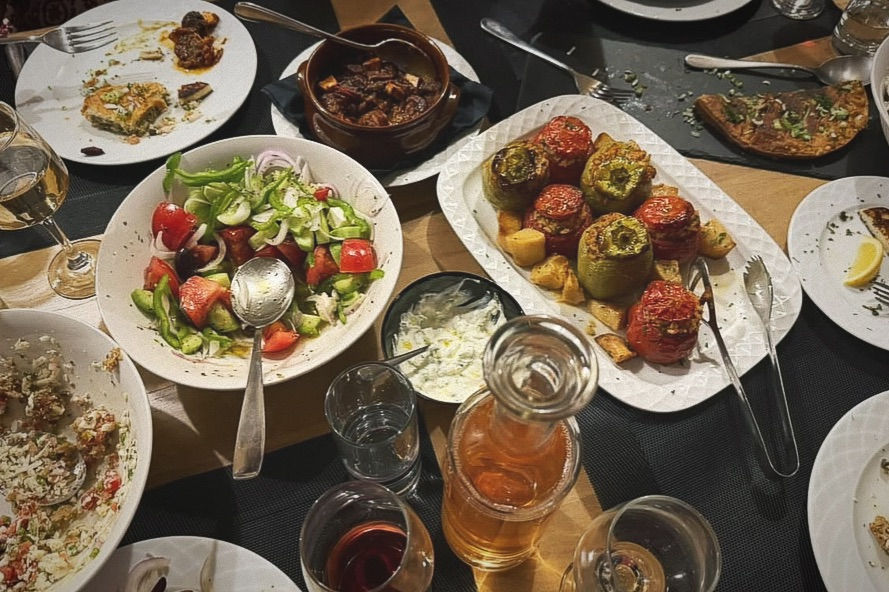
Table of Contents
1. Is There Really One Best Greek Restaurant in Athens?
2. What Makes a Greek Restaurant Worth Choosing?
3. Which Athens Dining Style Is Right for You?
4. Eight Ways to Experience Greek Food in Athens
5. How Athenians Actually Choose Where to Eat
6. Local Tips for Choosing a Restaurant
7. Myth vs Reality
8. Restaurant or Greek Home Dinner?
9. Choosing a Dining Experience for Your Trip
10. Planning Your Meals in Athens
11. Common Mistakes
12. Ask Giannis
13. Frequently Asked Questions
Is There Really One Best Greek Restaurant in Athens?
Search results encourage us to think that every city has a clear winner. One restaurant must be number one, another number two, and everything else can be arranged beneath them. Dining in Athens does not work so neatly.
A restaurant can be excellent at one thing and entirely wrong for another occasion. The taverna that is perfect for a noisy Sunday lunch may not suit an anniversary. The fashionable modern restaurant praised by food lovers may disappoint someone hoping for rustic family cooking. The rooftop with the unforgettable view may be ideal for a first night in Athens, even if a simpler neighborhood restaurant serves the more interesting food.
The word “best” becomes useful only when you complete the question:
· Best for a traditional family-style meal?
· Best for local atmosphere?
· Best for a quick lunch?
· Best for vegetarians?
· Best for a celebration?
· Best for understanding Greek culture through food?
Once you know what you want from the meal, choosing becomes much easier.
The difference between excellent food and the right experience
Food quality matters, but it is only one part of a meal. Timing, company, location, service, noise level, pace, view, and the way dishes are served can change how an evening feels.
Imagine two travelers. One has just spent six hours walking around the Acropolis and wants a relaxed table, cold wine, and familiar dishes. The other has planned the entire day around dinner and wants to discover rare Greek ingredients through a carefully designed menu. Sending both travelers to the same restaurant would not be helpful, even if that restaurant were outstanding.
This is why our guide does not rank restaurants from one to ten. Restaurant lists become dated quickly, and a numbered ranking often hides the information a traveler truly needs. Our aim is to give you a method you can use when reading menus, comparing recommendations, or walking through an unfamiliar neighborhood.
If you first want to explore the dishes, seasons, and neighborhoods connected with traditional cooking, read our complete guide to traditional Greek food in Athens. This article begins at the next stage: deciding what kind of place is right for your meal.
What Makes a Greek Restaurant Worth Choosing?
An authentic Greek restaurant does not need checkered tablecloths, folk music, blue chairs, or a menu filled with every famous dish a visitor can name. Authenticity is better understood through the kitchen’s choices: what it cooks, where its ideas come from, how it responds to the season, and whether it has a clear reason for existing.
The following signs do not create a rigid formula, but together they can reveal a great deal.

A focused menu with a clear identity
A good restaurant usually knows what it wants to be. A taverna may specialize in grilled meats and a small selection of cooked dishes. An ouzeri may concentrate on seafood meze. A modern Greek restaurant may build its menu around regional products and contemporary techniques.
A long menu is not automatically bad, but a kitchen that promises Greek classics, pizza, sushi, burgers, pasta, breakfast, steaks, and international cocktails all at once is unlikely to treat every category with equal care.
Look for coherence. The dishes should feel as if they belong at the same table.
Seasonal ingredients and dishes of the day
Greek cooking has always followed the seasons. Tomatoes, peppers, eggplants, greens, beans, artichokes, fish, fruit, and herbs all have moments when they are at their best. Restaurants that cook with the market often feature daily specials or change parts of the menu during the year.
Ask what was prepared that morning or what the kitchen recommends today. The answer may lead you away from the dish you had planned to order, and that is often a good thing.
A recognizable regional or culinary point of view
Greek cuisine is not one uniform collection of recipes. Crete, the Peloponnese, Macedonia, Epirus, the Cyclades, Asia Minor, the Ionian Islands, and many other regions have distinct ingredients and traditions.
A restaurant does not need to represent one region exclusively, but the menu should show some point of view. Perhaps it focuses on Cretan greens and cheeses, seafood from the islands, recipes from Constantinople, or the vegetable-based cooking found in Greek homes. Specificity often tells you more than the general promise of “authentic Greek cuisine.”
Hospitality that feels natural
Greek hospitality is warm, but it is not always formal. A good waiter may tell you that you have ordered too much. Someone may recommend the less expensive dish because it is better that day. Service may feel conversational rather than rehearsed.
Warmth should not be confused with aggressive persuasion. Staff standing outside and pressuring passersby to sit down are selling availability, not necessarily the strengths of the kitchen.
A pace that suits Greek dining
Many Greek meals unfold slowly. Dishes arrive for the table, wine is poured, another plate is added, and conversation continues after everyone has stopped eating. This rhythm can be one of the pleasures of dining in Athens.
Slow service caused by disorganization is not the same as an unhurried meal, of course. The difference is whether you feel forgotten or simply allowed to stay.
Fair value rather than the lowest price
Authentic food is not required to be cheap. High-quality olive oil, seafood, meat, regional cheeses, skilled staff, and a central location all carry costs. At the same time, a high price does not guarantee better cooking.
Value means that the food, service, setting, and overall experience justify what you pay. Judge the entire offer rather than searching only for the cheapest or most expensive option.
A view that supports the meal
Dinner opposite the illuminated Acropolis can be unforgettable. Athens is one of the rare cities where a historical monument can remain present throughout an evening, and there is nothing inauthentic about enjoying that beauty.
The view should still be considered separately from the kitchen. Read reviews that discuss the food in detail, examine the menu, and ask whether you would still want to eat there if the terrace faced another direction. If the answer is yes, the view becomes a genuine advantage.
Which Athens Dining Style Is Right for You?
Dining style | Best for | What to expect | Main trade-off |
Traditional taverna | A relaxed shared meal | Familiar dishes, meze, grilled food, wine, informal service | Quality and style vary widely |
Mageireio | Everyday Greek cooking | Slow-cooked dishes, casseroles, vegetables and daily specials | Often best at lunchtime, with dishes selling out later |
Meze restaurant or ouzeri | Friends, couples and social dining | Many small plates with wine, ouzo or tsipouro | Easy to order more than you need |
Grill house | A quick, casual and affordable meal | Souvlaki, gyros, skewers and grilled meats | Shows only one part of Greek cuisine |
Neighborhood restaurant | Eating closer to everyday local life | Regular customers, a relaxed setting and a focused identity | May require leaving the main sightseeing route |
Modern Greek restaurant | Food-focused travelers | Greek products interpreted with contemporary techniques | Usually more structured and more expensive |
Rooftop restaurant | A first night, romance or a celebration | City atmosphere and views of the Acropolis | The location may carry part of the price |
Greek home dining | Local connection and cultural context | A curated meal, hosts, stories, live preparation and conversation | Requires advance planning and more time |

Eight Ways to Experience Greek Food in Athens
Traditional tavernas
The traditional taverna is what many travelers picture when they imagine eating in Greece: an informal dining room or courtyard, tables filled with shared plates, house wine, grilled meat or fish, cooked vegetables, salads, dips, and people staying longer than planned.
A taverna works well when you want freedom. You can order lightly or build a feast. You can focus on familiar classics or ask about the day’s dishes. The atmosphere is usually relaxed enough for families and groups, yet solo diners can also feel comfortable, particularly at lunch or earlier in the evening.
The term “taverna” does not guarantee quality. It describes a tradition and style of eating, not an official standard. Study the menu and recent reviews as you would for any restaurant. The strongest tavernas often have a particular character: excellent grilled meat, fish brought in that day, regional recipes, or a few cooked dishes for which regular customers return.
Choose a taverna when you want the social form of a Greek meal: several dishes in the middle, a bottle of wine, and enough time to share both.
Mageireia
A mageireio is one of the best places to encounter the food Greeks associate with ordinary home cooking. The name comes from the verb “to cook,” and the emphasis is usually on prepared dishes rather than food cooked individually to order.
You may see trays or pots of gemista, pastitsio, moussaka, green beans in tomato sauce, braised meat, lentils, chickpeas, okra, peas, or other mageirefta. The selection changes, and popular dishes can sell out.
Mageireia often make most sense at lunchtime. They serve office workers, neighborhood residents, students, and people who want a proper cooked meal without turning lunch into an occasion. Decor may be simple, and the menu may not resemble what travelers expect from a “top restaurant.” That simplicity is part of the format.
Choose a mageireio if your idea of authentic Greek food is closer to what might appear on a family table on a weekday than to a ceremonial dinner.

Meze restaurants and ouzeri
Meze is not simply a category of small dishes. It is a way of extending a drink, a conversation, and a meeting around the table. A mezedopoleio, ouzeri, or tsipouradiko encourages diners to order several plates for everyone to taste.
The food may include cheeses, olives, spreads, vegetables, sausages, meatballs, anchovies, octopus, shellfish, fried fish, or local specialties. The exact selection depends on whether the restaurant leans toward the sea, the grill, or a particular region.
Ordering meze can be confusing for first-time visitors because there is no perfect number of dishes. Start modestly. Ask the server about portion sizes, order a few plates, and add more if you are still hungry. Greek tables often grow gradually.
Choose this format when the conversation matters as much as the sequence of courses. It is especially enjoyable for couples and groups who like tasting many flavors rather than committing to one main dish each.
Grill houses and souvlaki shops
Souvlaki is part of everyday Athenian life. It can be a quick lunch, an inexpensive dinner, food after a late night, or an easy meal delivered to a family home. A good grill house may serve pork or chicken skewers, gyros, kebabs, grilled patties, pita, potatoes, tomatoes, onions, and tzatziki.
This is genuine local food, even when it is fast and casual. The mistake is assuming that it represents the whole of Greek cuisine. If every meal in Athens is built around gyros and souvlaki, you will miss the vegetables, legumes, pies, seafood, slow-cooked dishes, regional cheeses, and seasonal recipes that form much of the country’s food culture.
Choose a grill house when you want something direct, satisfying, and informal. Let it be one chapter of your Athens food experience rather than the entire story.
Neighborhood restaurants
Travelers often ask where locals eat, as if every Athenian knows one secret restaurant hidden from visitors. In reality, locals eat in many different places. What makes a restaurant local is often not obscurity but its relationship with the neighborhood.
Regular customers return because they trust certain dishes, know the people, or enjoy the atmosphere. The restaurant may be old or new, traditional or creative. It may even be well known. What matters is that it serves a life beyond tourism.
Neighborhoods such as Koukaki, Pangrati, Petralona, Kypseli, Mets, Exarchia, and many others contain restaurants that reflect the habits of the people living nearby. You do not need to travel to the edge of the city to eat well, but walking beyond the most crowded streets often gives you more varied choices.
If you enjoy discovering the city outside its headline attractions, our guide to hidden gems in Athens offers ideas for neighborhoods, viewpoints, markets, and local experiences worth adding to your trip.
Choose a neighborhood restaurant when you want dinner to feel connected to the part of Athens around it.
Modern Greek restaurants and gastro tavernas
Greek cuisine has never stood still. Ingredients, migrations, trade, economic change, and contact with other cultures have always influenced what Greeks cook. Contemporary chefs continue that process by working with local products in new ways.
A modern Greek restaurant may rethink the presentation of fava, pair traditional cheeses with unexpected ingredients, use fermentation or refined techniques, or transform a familiar home dish into a composed course. The result can still be deeply Greek even when it does not look like a plate served in a village taverna.
Authenticity does not require a recipe to remain frozen in time. What matters is whether the cooking understands the ingredient or tradition it is interpreting.
Choose modern Greek cuisine if you enjoy chefs’ tasting menus, creative combinations, regional products, and a more structured dinner. Our Modern Times in Traditional Greek Cuisine experience explores the same conversation between heritage and change in the intimate setting of a local home.

Rooftop restaurants and Acropolis view dining
An Acropolis view carries real emotional value. Seeing the Parthenon change color at sunset and glow above the city after dark can turn dinner into one of the defining memories of a trip.
Rooftop dining works particularly well for a first or final evening, a honeymoon, an anniversary, or any occasion when the setting deserves special weight. It can also be a practical way to combine dinner with the city’s nighttime atmosphere.
Before booking, check more than the promotional photographs. Is the view visible from every table or only part of the terrace? Does the menu suit your preferences? Do recent guests praise particular dishes, or mostly the scenery? Is the atmosphere relaxed, formal, crowded, or driven by cocktails and music?
Choose a rooftop because you value both the setting and the meal. When the kitchen and view support each other, the premium can be worthwhile.
Greek home dining

Home dining belongs in this guide even though it is not a conventional restaurant category. For some travelers, it answers the real intention behind the search for an “authentic Greek restaurant” better than another restaurant reservation.
At a home dinner, the menu is usually curated in advance. The hosts explain the dishes, recipes, ingredients, and traditions. Guests may watch the chef preparing parts of the meal, ask questions as they arise, and learn why a particular recipe matters to a family or region. The evening has a beginning, a natural progression, and enough time for conversation.
This format is best for travelers who want context and connection. It is less suitable for someone who wants to arrive without a reservation, order one quick dish, or leave after forty-five minutes.
At Eat with Giannis and Konstantinos, guests join us in our seventh-floor home in Athens. They can watch Chef Giannis prepare their dinner, hear the stories and recipes behind the dishes, learn about Greek cuisine and culture, drink local wine, and enjoy panoramic views that include the Acropolis and Lycabettus Hill. Some evenings bring travelers from different countries around one table; private bookings create a more personal setting for couples, families, and groups.
If this kind of evening interests you, our detailed guide explains what to expect from a Greek home dinner in Athens.
From Our Table
Guests often arrive at our home after several days of eating well in Greece. They have tried moussaka, souvlaki, Greek salad, and perhaps a few dishes they had never encountered before. What they still want to understand is how those foods fit into Greek life.
During dinner, a simple recipe can open a much larger conversation. Gemista leads to summer vegetables and the different versions made by Greek families. Fava leads to Santorini and the importance of regional products. Moussaka leads to the way recipes travel and change. A glass of wine leads to the landscapes and grape varieties of the Peloponnese.
The food was already good before the story. The context gives the guest another way to remember it.
That is one reason we encourage travelers to experience more than one dining format while they are in Athens. A restaurant can introduce the city through its menu. A home table can explain why the food matters to the people who cook it.

How Athenians Actually Choose Where to Eat
Athenians do not spend every evening searching for the highest-rated restaurant in the city. They choose according to the occasion, the company, the neighborhood, the time available, and sometimes one particular dish they want to eat.
They choose the occasion before the category
A family Sunday lunch, a drink with meze after work, a birthday, a business dinner, and a quick meal on the way home require different places. Locals are less likely to ask which restaurant is universally best and more likely to ask which place works tonight.
Travelers can use the same logic. Decide whether the meal is fuel, discovery, relaxation, romance, celebration, or cultural experience. Then compare restaurants within the right category.
They return for specific dishes
A restaurant may become known among its regular customers for grilled liver, fish soup, meatballs, lamb, pies, or one exceptional vegetable dish. Locals often follow the strength of the kitchen rather than expecting one restaurant to master everything.
When reading reviews, look for repeated praise of specific food. “Amazing place” tells you very little. Several detailed comments about the same dish tell you much more.
They ask what is good today
Daily specials matter because the best choice can change. A fish may have arrived that morning. A slow-cooked dish may be available only until it sells out. Certain vegetables may be at their peak.
Asking for a recommendation does not mean surrendering control of the meal. It gives the kitchen a chance to show you what it currently does best.
They are willing to travel, but not always far
Athenians cross the city for a restaurant they love, yet local dining also means walking to a familiar place nearby. You do not need to turn every dinner into an expedition. A restaurant close to your hotel can be an excellent choice if its identity, menu, and recent feedback are convincing.
They share
Many Greek meals are ordered for the table. This does not mean every dish must be shared, particularly in formal or contemporary restaurants. In tavernas and meze restaurants, however, sharing lets everyone taste more and creates the rhythm locals expect.
They give the meal time
Greek dining often leaves room for the evening to continue. Dessert may arrive, another conversation may begin, and nobody feels pressure to treat the table as a short appointment. When possible, avoid scheduling dinner between two tightly timed activities.
Local Tips for Choosing a Restaurant in Athens
· Ask what was cooked today. Daily dishes can be more revealing than the permanent menu.
· Read recent reviews for details. Look for descriptions of food, service, noise, portions, and atmosphere that matter to you.
· Check the menu before making a special journey. A famous restaurant may be excellent but wrong for your dietary needs or preferred style.
· Notice whether the menu has a point of view. A focused identity is usually more useful than a catalogue of everything associated with Greece.
· Treat local customers as one signal, not a test. Visitors can fill excellent restaurants, and locals also eat in central tourist districts.
· Do not reject an English menu automatically. Athens is an international capital. Translation can be good hospitality.
· Reserve important dinners. For a celebration, limited-seat experience, popular restaurant, or terrace at sunset, advance planning protects the evening.
· Leave one meal unplanned. Recommendations from hosts, shopkeepers, guides, or people you meet can lead to the most personal discovery of the trip.
Myth vs Reality
Myth 1: The best restaurants are always full of locals
Reality: A local clientele is encouraging, especially in a residential area, but it is not a guarantee. Athenians have different tastes and budgets, and good restaurants in central areas naturally attract travelers. Look at the food, identity, and consistency of the place as well as the people in the room.
Myth 2: An English menu means the restaurant is a tourist trap
Reality: Restaurants translate menus because Athens receives international visitors. Poor translations, photographs of every dish, aggressive sales tactics, and an unfocused menu may raise questions, but English itself is not a warning sign.
Myth 3: Restaurants near the Acropolis cannot be authentic
Reality: The historic center contains both tourist-oriented businesses and serious restaurants. Location creates demand; it does not determine the quality of the kitchen. Research individual places rather than rejecting an entire neighborhood.
Myth 4: The best Acropolis view guarantees the best meal
Reality: A view and a kitchen are separate strengths. Some places offer both. At others, the scenery does most of the work. Decide how much the setting matters to your occasion and read food-focused reviews.
Myth 5: Traditional Greek food should always be inexpensive
Reality: Humble dishes are important to Greek cooking, but authentic ingredients and careful preparation still have a cost. Fresh fish, quality meat, regional cheeses, good olive oil, skilled staff, and central premises can raise prices legitimately.
Myth 6: Modern Greek cuisine is not authentic
Reality: Greek food has always absorbed new ingredients and influences. Contemporary cooking can respect tradition without copying the past exactly. The meaningful question is whether the chef understands the products and recipes being reinterpreted.
Restaurant or Greek Home Dinner
Neither format is automatically better. They answer different needs.
Question | Conventional restaurant | Greek home dinner |
Can I choose individual dishes? | Usually | Usually a curated set menu |
Can I arrive spontaneously? | Sometimes | Advance booking is normally required |
Can the meal be quick? | Often | Usually designed as a complete evening |
Will I meet the cook or host? | Sometimes | A central part of the experience |
Will recipes and traditions be explained? | Occasionally | Usually built into the meal |
Is there cultural storytelling? | Depends on the restaurant | An important part of the format |
Is it suitable for local connection? | Possible, but not guaranteed | Designed around interaction |
Can dietary needs be planned in advance? | Often | Often, with advance notice |

What restaurants do especially well
Restaurants offer flexibility and range. You can choose the time, location, budget, atmosphere, and menu that suit you. You can return to a place you love, eat quickly when necessary, or organize an elegant dinner with professional service. Athens would be impossible to understand through one dining format alone, and its restaurants reveal both its traditions and its changing tastes.
What home dining adds
A home dinner removes some of that flexibility in exchange for access. Guests do not simply receive plates; they meet the people preparing and presenting them. Questions are welcome. Recipes have room to be explained. The hosts can connect a dish to a childhood memory, a region, a holiday, or a change in Greek society.
At our table, live cooking allows guests to see part of the preparation rather than encountering the finished plate without context. The local wine, panoramic city view, and shared conversation belong to the same evening. The experience is designed to unfold over approximately three hours, not to imitate a restaurant with a private address.
Who is most likely to enjoy dinner with locals
Home dining is particularly well suited to curious travelers, solo visitors who would like company, couples who value personal experiences, families interested in culture, and groups looking for a private evening. It also appeals to people who have already eaten in several restaurants and want to see Greek food from another perspective.
A conventional restaurant may suit you better if you want complete freedom to order, need a very short meal, prefer minimal interaction, or want to decide at the last moment. Knowing that in advance helps you choose honestly.
You can compare our Greek dining experiences in Athens, including traditional, vegan, famous-dish, modern Greek, and brunch menus.
From Our Table: Food Tastes Different When You Know Its Story
Recipes travel through families in imperfect, personal ways. One cook adds more herbs. Another insists that a certain cheese belongs in the dish. Someone else follows a version learned on an island or adapted after moving to Athens.
When guests ask for “the authentic recipe,” we often explain that Greek authenticity includes these differences. There may be a shared tradition, but there is rarely only one household version.
That understanding changes the conversation. A traveler stops asking whether one moussaka is correct and begins noticing how it differs. A vegetable dish that first looked simple becomes a lesson in seasonality and olive-oil cooking. A dessert reveals the influence of religion, migration, or a family celebration.
Knowing the story does not magically improve the ingredients. It gives the diner more to taste.
Which Dining Experience Fits Your Trip?
Solo travelers
Athens is comfortable for solo dining, particularly in casual restaurants, cafés, tavernas, and places with counter or outdoor seating. Lunch is often the easiest time to explore independently. Ordering two or three small plates can create your own tasting meal without requiring a group.
If you would like conversation, a shared home dinner can turn one evening into a social experience. Many solo travelers join our table and naturally meet other guests. For broader planning advice, see our guide to solo travel in Athens.
Couples and honeymooners
Couples should decide whether privacy, atmosphere, food discovery, or local interaction matters most. A rooftop can provide romance and city views. A modern Greek restaurant can make the menu the focus. A private home dinner can offer a quieter, more personal evening with the hosts.
For a special occasion, tell the restaurant or host when you book. The right setting is more important than choosing the place with the most dramatic online description.
Families with children
Tavernas and grill houses are often forgiving choices because dishes can be shared and the atmosphere is informal. Early dinner may be more comfortable for younger children. Ask about portion sizes and ingredients rather than assuming a familiar-looking dish is prepared exactly as it is at home.
For a home dining experience, share children’s ages and needs in advance. A three-hour meal may delight children who enjoy food and conversation, but it may feel long for others.
Groups of friends
Groups are ideally placed to explore meze and taverna dining because they can share a wider selection. Reservations become more important as the group grows, particularly on Friday and Saturday evenings.
A private dining experience can simplify planning by offering a set menu, a dedicated setting, and dietary coordination in advance. It also allows the evening to remain centered on the group rather than a crowded dining room.

Special occasions
For anniversaries, birthdays, proposals, and milestone trips, think about what will make the evening personal. Some people value formal service. Others want a view, privacy, live cooking, or the chance to speak with the chef.
Do not rely on the word “special” alone when making an inquiry. Explain what the occasion means to you and what kind of atmosphere you hope to create.
Vegetarian and vegan travelers
Greek cuisine contains many vegetable, legume, grain, and olive-oil dishes, but menus do not always label them clearly. Some vegetable dishes may contain dairy, eggs, meat stock, or seafood, so ask specific questions.
Traditional tavernas can provide excellent plant-based meals through shared starters and ladera, the family of vegetables cooked with olive oil. A dedicated experience such as Vegan Greek Flavors provides a more complete menu built around Greek vegan cooking rather than a collection of side dishes.
Travelers interested in modern Greek cuisine
Choose a restaurant or tasting experience that names its producers, regions, and ingredients clearly. Creativity is most rewarding when you can still recognize the connection with Greece.
Read the menu as a statement of intent. Does it use modern technique to reveal something about a local product, or does it add complexity without a reason? The first approach usually creates the more memorable meal.
How to Plan Your Athens Meals
If you have only one dinner
Choose the memory you want. If you have never eaten Greek food in Greece, a strong taverna with shared dishes may give you the broadest introduction. If the Acropolis at night matters deeply to you, select a place where both the view and menu are convincing. If meeting local people and understanding the food are priorities, consider a home dinner.
There is no need to make one meal represent the entire cuisine of Greece. Aim for one coherent experience rather than the longest possible menu.
If you have two dinners
Combine contrast. One evening might be a taverna or meze restaurant; the other could be modern Greek cuisine, a rooftop, or home dining. The second meal should show you something the first could not.
For example, a neighborhood taverna can teach you how Athenians share food informally, while a home dinner can connect those dishes with family recipes and cultural stories.
If you have three or more dinners
Build a small food journey. Include a casual meal such as souvlaki, a lunch of mageirefta, a shared taverna or meze dinner, and one experience chosen for its setting or depth. This balance is more revealing than booking several restaurants that all serve similar versions of the same classics.
If you visit the Acropolis early in your stay, our guide to what to do in Athens after the Acropolis can help you connect sightseeing with neighborhoods, walks, and food.
Common Mistakes Travelers Make
Searching endlessly for one universal winner
Restaurant research can consume hours without producing a better decision. Define the dining style, location, budget, and atmosphere you want, then choose among a short list of places that meet those conditions.
Choosing by view alone
An Acropolis view can justify part of the experience, but it cannot repair a menu you do not want to eat. Evaluate the table and the terrace separately.
Reading ratings without context
An overall score combines opinions from people with different expectations. Read the words. A complaint about slow pacing may not matter to someone planning a long dinner. Praise for enormous portions may be irrelevant to a traveler seeking refined cooking.
Ordering only famous dishes
Moussaka, souvlaki, tzatziki, and Greek salad deserve their popularity, but repeating them at every meal narrows your experience. Ask about vegetables, legumes, pies, regional cheeses, fish, and the day’s cooked dishes.
Ignoring lunch
Travelers often save all their dining research for dinner. Lunch can be the best time for mageirefta, market visits, bakeries, and the everyday food of the city. A memorable food day does not need to begin at sunset.
Assuming expensive means authentic
Price reflects many factors, including rent, service, ingredients, design, and location. It does not measure cultural truth. Both a modest mageireio and an ambitious tasting menu can express Greek cuisine honestly.
Scheduling every meal too tightly
Reservations protect important evenings, but a completely fixed itinerary leaves no room for a recommendation or unexpected discovery. Plan the meals that matter most and keep some flexibility around the rest.
Expecting home dining to behave like a restaurant
A home experience usually has a set starting time, curated menu, limited seats, and an expected duration. Those features make conversation and hosting possible. Choose it because you want the complete evening, not as a substitute for a quick restaurant booking.
Ask Giannis
If you had only one Greek meal in Athens, what would you look for?
“I would not begin with the name of a dish. I would look for a kitchen that knows what it wants to cook that day.
I would ask about the seasonal ingredients and the dishes that required time: vegetables cooked slowly in olive oil, something from the oven, a recipe connected with a particular place, and perhaps one ingredient I had never tried before.
I would also pay attention to how the meal is meant to be eaten. Greek food makes the most sense when there is something in the middle of the table and enough time to talk. The restaurant can be simple or refined. What matters is that the cooking has a reason behind it and the hospitality allows you to enjoy it.”
Frequently Asked Questions About Greek Restaurants in Athens
What is the best Greek restaurant in Athens?
There is no single best restaurant for every traveler. A traditional taverna, modern Greek restaurant, seafood place, rooftop, and home dinner serve different purposes. Define the food, atmosphere, location, and kind of experience you want before comparing individual places.
Where can I find authentic Greek food in Athens?
Authentic Greek food can be found throughout the city, including the historic center and residential neighborhoods. Look for focused menus, seasonal dishes, regional specialties, daily recommendations, and restaurants with a clear culinary identity.
Where do locals actually eat in Athens?
Athenians eat across the city and choose according to the occasion. Neighborhoods such as Koukaki, Pangrati, Petralona, Kypseli, Mets, and Exarchia offer many local restaurants, but central areas can also contain excellent options.
Are restaurants in Plaka tourist traps?
Some restaurants in Plaka are designed mainly for tourist traffic, while others take their food seriously. Plaka should be evaluated restaurant by restaurant. Study the menu, recent detailed reviews, and the way staff present the kitchen.
Can you find good Greek restaurants near the Acropolis?
Yes. The districts around the Acropolis include traditional, modern, casual, and view-focused restaurants. Their proximity to a major attraction does not determine quality, although prices and crowds may be higher in the busiest streets.
What is the difference between a taverna and a restaurant?
A taverna is generally informal and centered on shared dishes, familiar recipes, grilled food, wine, and relaxed service. “Restaurant” is a broader term and can describe anything from casual dining to a formal tasting menu.
What is a mageireio?
A mageireio serves prepared, home-style dishes such as casseroles, legumes, vegetables cooked in olive oil, and braised meat. It is often most active at lunchtime, and the selection may change daily or sell out.
What is a mezedopoleio or ouzeri?
These are places built around meze: small dishes shared with wine, ouzo, or tsipouro. The meal is social and flexible, with guests often ordering a few plates first and adding more gradually.
Is modern Greek cuisine still authentic?
It can be. Greek cuisine has always evolved. Modern cooking remains connected to Greece when it treats local ingredients, regional traditions, and familiar flavors with knowledge and purpose.
Are rooftop restaurants in Athens worth it?
They can be, especially for a celebration or a first evening with an Acropolis view. Check whether the food, service, atmosphere, and actual view from your table justify the price rather than choosing from photographs alone.
Where can I have dinner with an Acropolis view?
Rooftop restaurants and terraces around the historic center offer Acropolis views. Some local home dining experiences, including Eat with Giannis and Konstantinos, also combine dinner with a panoramic city and Acropolis view.
How can I recognize a tourist-oriented restaurant?
Possible signs include aggressive invitations from staff outside, an extremely broad international menu, photographs of every dish, and little information about ingredients or specialties. No single sign proves poor quality, so consider them together.
Does an English menu mean a restaurant is not authentic?
No. English menus are normal in an international city. Translation helps visitors understand what they are ordering. The focus and content of the menu matter more than the language in which it is printed.
Should I trust online restaurant ratings in Athens?
Use ratings as a starting point. Read recent reviews that describe particular dishes, service, noise, waiting times, and value. Those details reveal whether the reviewer wanted the same experience you do.
Do I need restaurant reservations in Athens?
Reservations are advisable for popular restaurants, Friday and Saturday evenings, large groups, special occasions, limited-seat experiences, and terraces with specific views. Casual tavernas and grill houses may accept walk-ins, especially outside peak times.
What time do locals eat dinner in Athens?
Athenians often eat later than visitors from northern Europe or North America. Restaurants still serve earlier diners, particularly in central areas. Choose the time that suits you; a later reservation usually provides a more local evening atmosphere.
Is lunch or dinner better for traditional Greek food?
Lunch is particularly good for mageirefta and slow-cooked daily dishes. Dinner offers a broader choice of tavernas, meze restaurants, modern cuisine, and view-focused experiences. Ideally, use both meals to explore different formats.
How much does a good meal in Athens cost?
The cost depends on the category, location, ingredients, drinks, and whether the experience includes a view or set menu. Check current menus before visiting. Good Greek food exists at casual, mid-range, and premium price points.
Is tipping expected in Athens restaurants?
Service should not depend on a large tip. Guests commonly leave a modest amount when they are happy, often by rounding up or adding a percentage appropriate to the bill and service. Check whether a service charge has already been included.
Are Greek dishes normally shared?
In tavernas and meze restaurants, salads, starters, spreads, and many main dishes are commonly placed in the middle. In modern or formal restaurants, individual courses are more usual. Ask about portion sizes if you are unsure.
What should I order beyond moussaka and souvlaki?
Look for gemista, briam, gigantes, horta, fava, soutzoukakia, seasonal pies, local cheeses, fish, legumes, and the restaurant’s daily cooked dishes. The best choices will depend on the season and the kitchen’s specialty.
Is Athens good for vegetarian and vegan travelers?
Yes. Greek cooking includes many vegetables, legumes, grains, dips, salads, pies, and ladera dishes. Confirm whether a dish contains cheese, eggs, meat stock, honey, or seafood, because traditional menus do not always label every ingredient.
Can Greek restaurants accommodate food allergies?
Many can, but communication is essential. Contact the restaurant before booking, describe the allergy clearly, and ask about cross-contact if it is medically important. A translated allergy card can be useful.
Are Greek restaurants suitable for children?
Many tavernas, grill houses, and neighborhood restaurants welcome families. Shared dishes make it easier to offer children several choices. Earlier dining times and outdoor seating may be more comfortable for younger guests.
Is it comfortable to dine alone in Athens?
Yes. Solo diners are common in cafés, casual restaurants, tavernas, and lunch spots. Sitting outdoors, choosing small plates, or joining a social food experience can make the meal feel especially comfortable.
Is there a dress code for restaurants in Athens?
Most restaurants are relaxed. Smart casual clothing is sufficient for many modern, rooftop, and special-occasion restaurants. Very formal venues may have their own guidance, so check when booking.
What is the difference between a restaurant and a Greek home dinner?
A restaurant offers menu choice, flexible timing, and conventional service. A home dinner usually offers a curated menu, direct interaction with hosts, explanations of recipes and culture, and a longer shared experience that requires advance booking.
What is the best dining experience in Athens for travelers who want to meet locals?
A shared meal in a local home is one of the most direct options because conversation with the hosts is part of the evening. Neighborhood food tours, cooking classes, and social dining events can also create local interaction.
Final Thoughts
Athens does not need one restaurant to represent its food. Its dining culture is too varied for that.
A mageireio can show you what everyday cooked food looks like. A grill house can give you one of the city’s most familiar quick meals. A taverna teaches the pleasure of ordering for the table. A modern Greek restaurant reveals how chefs continue to reinterpret local products. A rooftop places the city itself beside your plate. A home dinner connects recipes with the people and stories behind them.
The most useful question is therefore not “Which is the best restaurant in Athens?” It is “What kind of Greek meal do I want to experience?”
Answer that first. Then look for a place with a clear identity, thoughtful cooking, honest hospitality, and an atmosphere that fits the occasion. The name at the top of a ranking will matter less than the match between the table and your journey.

Experience Greek Food Beyond a Conventional Restaurant Meal
If you want the freedom to choose individual dishes and dine on your own schedule, Athens has excellent tavernas, neighborhood restaurants, rooftops, and contemporary kitchens to explore.
If you are looking for a more personal evening, we would be happy to welcome you into our home.
At Eat with Giannis and Konstantinos, you can watch Chef Giannis prepare your dinner, discover the recipes and stories behind every dish, learn about Greek cuisine and culture, share local wine, and enjoy panoramic views of Athens, the Acropolis, and Lycabettus Hill. The experience is available for solo travelers, couples, families, and groups, with private dining options for guests who want the table to themselves.
Explore our Greek dining experiences in Athens, discover the Greek Feast, or book your dinner with locals when you are ready to experience Greek hospitality firsthand.


Comments